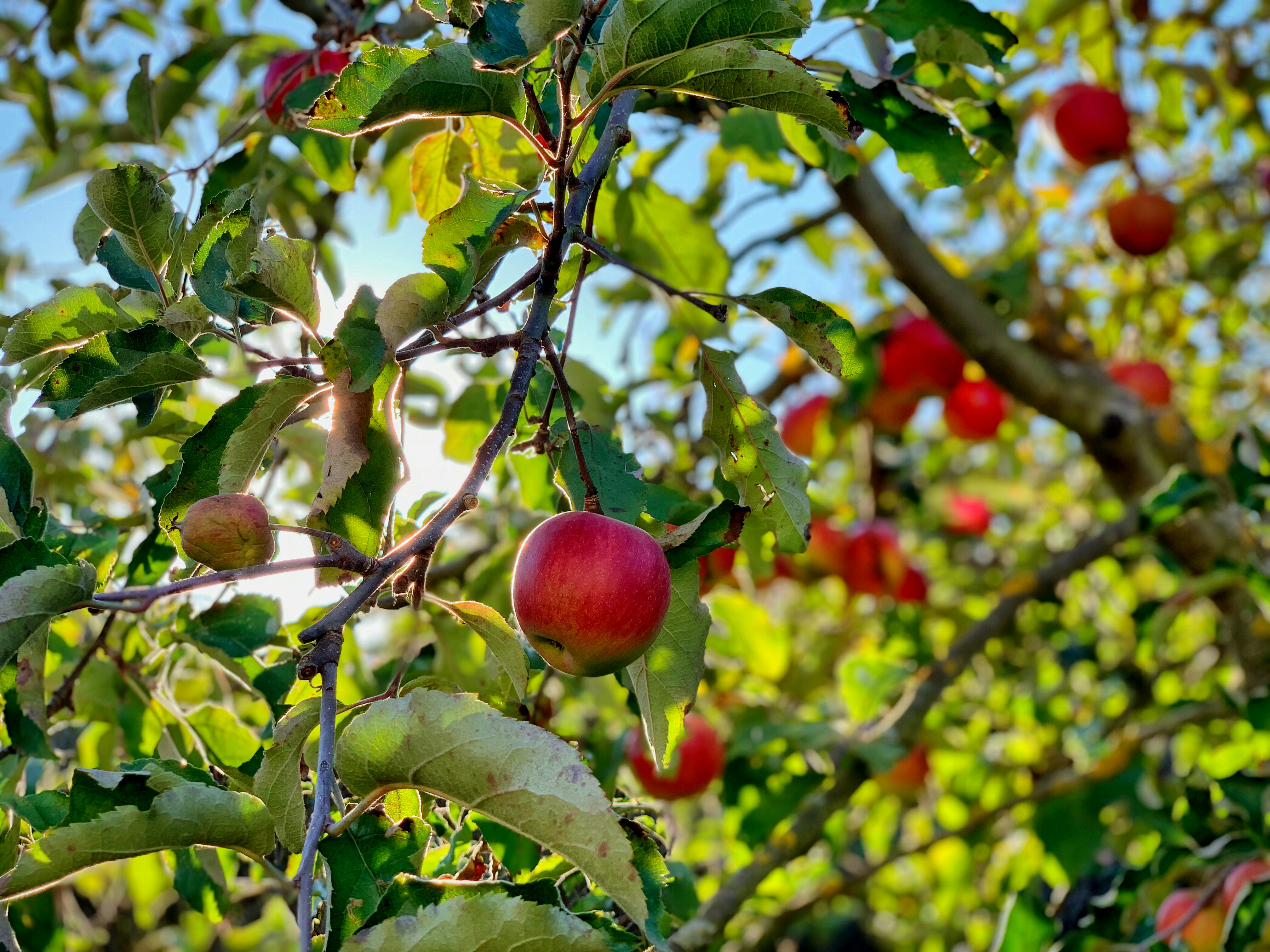
„The apple was sacred to the Celts and Germanic people, symbolizing life. Among the Celts, the land of the dead was called Avalon, which means ‘Apple Land’“
Natural
Our cider is a pure and unfiltered natural product! Only the pure fruits that have never been treated with pesticides are used. No additives, preservatives or sulfites are used. The preservation is ensured by the natural carbon dioxide produced during fermentation, the alcohol, the acid and the yeast.
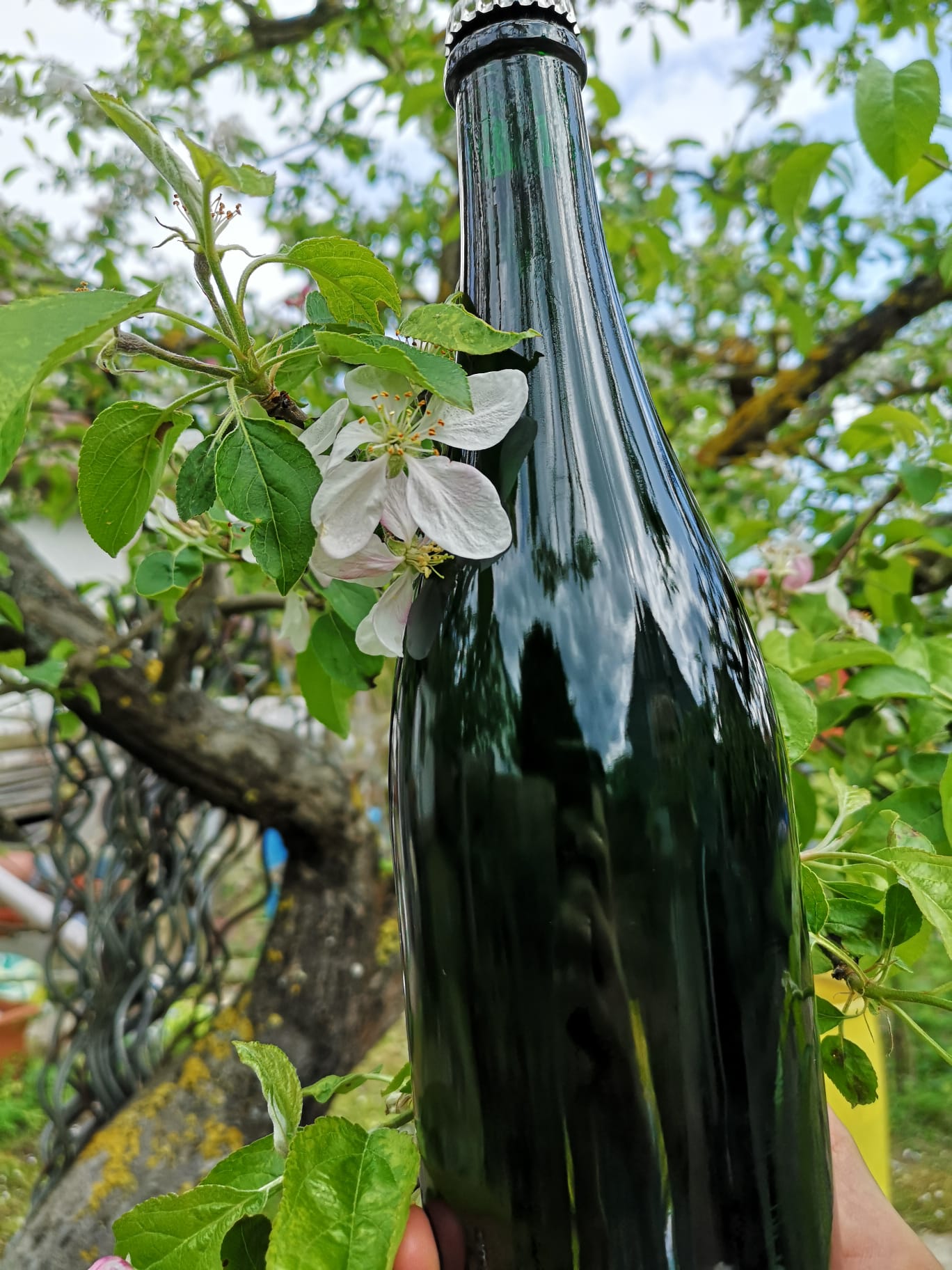
It is created without much machinery and is a wonderful, light, sparkling drink with little alcohol for beautiful, sunny days and is best enjoyed chilled! The Ciders are dry and do not have much residiual sugar left. If you like it more sweet, you are very welcome to mix it with apple juice (from a local traditional orchard „Streuobstwiese“)
Traditional Orchards „Streuobstwiesen“
With over 5,000 animal and plant species and over 3,000 types of fruit, the traditional orchards (in German called Streuobstwiesen) are hotspots of biological diversity throughout Europe.
In the 17th and 18th centuries, many orchards were created in Germany, and the value of fruit was very high. Unfortunately, today apples and other fruits often fall from trees and rot unused on the ground. Growing fruit in traditional orchards is no longer profitable. Pruning and harvesting fruit trees is complicated and juice companies often only pay a few euros for 100 kilos of apples.
Traditional varieties such as the large Rhenish bean apple, Lohrer Rambur, Boskop, Kaiser Wilhelm, Brettacher or the Bittenfelder seedling are completely free of pesticides, while in conventional and organic fruit growing (and also in organic viticulture), pesticides have to be applied several times a year.
An apple tree in a traditional orchard can live up to 100 years. Each tree has 100 m² of space to itself. 100 trees fit on one hectare. A harvest of 100 kg of apples or more is possible per tree.
An apple can be stored for a long time and provides valuable vitamins even in winter.
The area under cultivation for tree fruit in Germany is around 350,000 hectares. According to NABU estimates, 300,000 hectares of this are traditional orchards and 50,000 hectares – and therefore only around 14 percent – are intensive orchards. Bavaria has 8,460 hectares of organic, traditional orchards. That’s 38 percent of the country’s organic apple production. (In comparison, there are 100,000 hectares of viticulture and 16 million hectares of arable land in Germany)
Nationwide there are around 120 orchard associations, BUND and NABU groups, landscape conservation associations and thousands of organic agricultural producers that aim to achieve fair prices for those who manage orchards. They produce 100,000 tons of orchard fruit every year, which is processed into 75 million liters of drinks. More than ten percent of German apple juice production and the majority of the direct juice in Germany comes from orchards. (Unfortunately, the majority of fruit juice is made from concentrate from low-wage countries such as China)
In the 1950s to 1970s, cutting down orchards was subsidized in order to create new land for agriculture. Since 1965, 70% of the stocks in Bavaria have been lost. The new Bavarian Orchard Pact intends to make tree-care and planting new trees more attractive again. Anyone who wants to plant trees can apply for funding now.
“The best time to plant a tree was 20 years ago. The second best time is now.”
Ancient Chinese saying
Permaculture and Regenerative Agriculture (More than organic)
Permaculture (from permanent agriculture) is a concept for sustainable agriculture developed in the 1970s by Bill Mollison and David Holmgren. Permaculture is inspired by the traditional knowledge of indigenous people and natural ecosystems. High biodiversity stands here in contrast to monocultures of modern farming. No pesticides or artificial fertilizers are used. In the best case scenario, organic fertilizers are produced on your own farm or in collaboration with a neighbor in the spirit of the circular economy.
Regenerative agriculture is a form of agriculture recommended by the Food and Agriculture Organization of the United Nations (FAO) to feed humanity sustainably while preserving the irreplaceable resource of soil. It is based on the following principles:
- Minimum tillage
- Permanent ground cover with living plants or mulch
- Diversity of different plant species and crop rotations
- The use of animals as in natural ecosystems
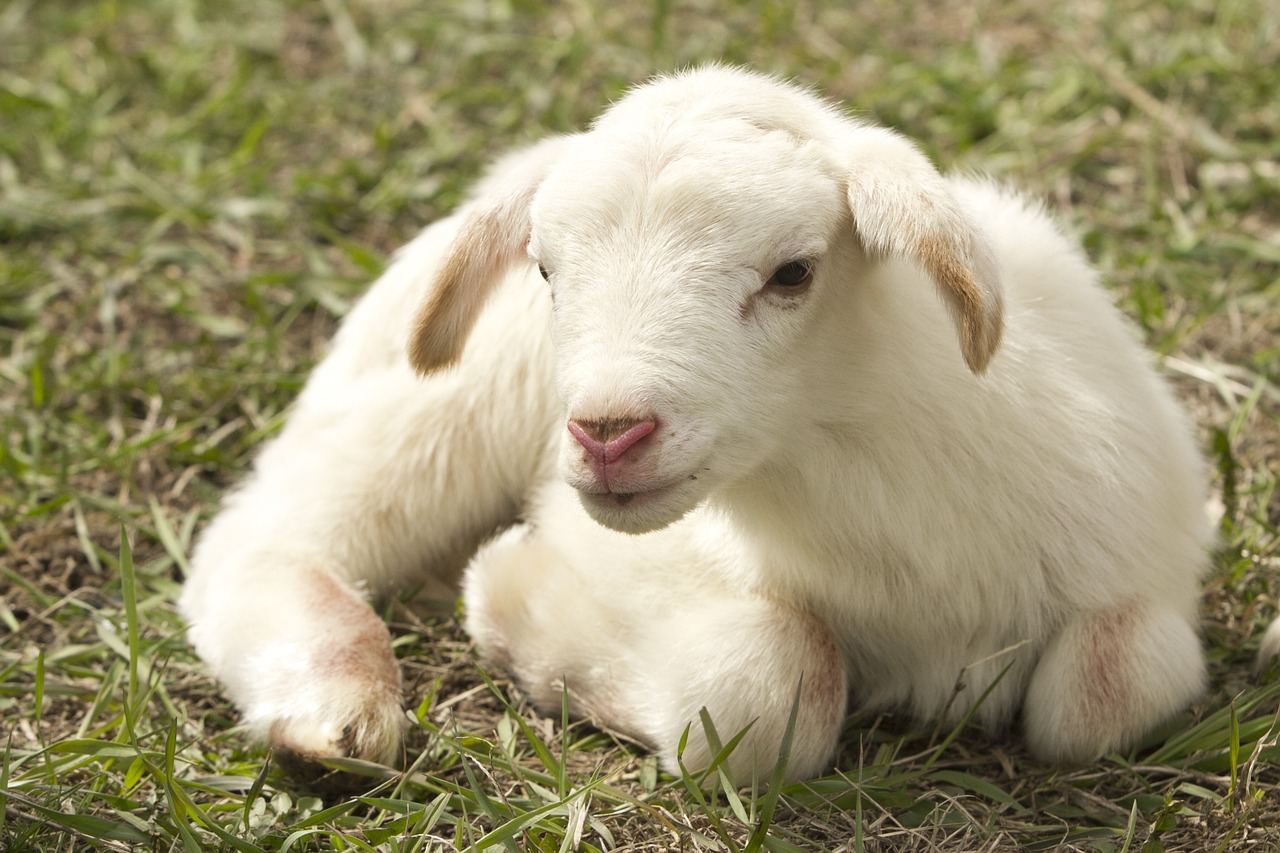
Honey bees and sheep are often kept on orchards. The bees help with pollination and the sheep keep the grass flat, eliminating the need for mowing. Perennial crops such as fruit trees are not sown annually like wheat and therefore the soil does not have to be cultivated and remains permanently covered by a species-rich meadow. This means that the use of machines is very low and this also ensures a lower Carbon footprint.
Trees provide us with their fruits and wood without much effort, such as plowing, sowing, weeding or watering. Before the so-called land consolidation, trees were much more common in our landscape. Today, agroforestry systems are becoming popular again because trees prevent erosion, promote biodiversity, collect water from deeper layers of the soil, provide organic material through their leaves and thus build humus, provide shade and thereby protect against drought and sequester Carbon from the atmosphere.